Hybrid Solar System
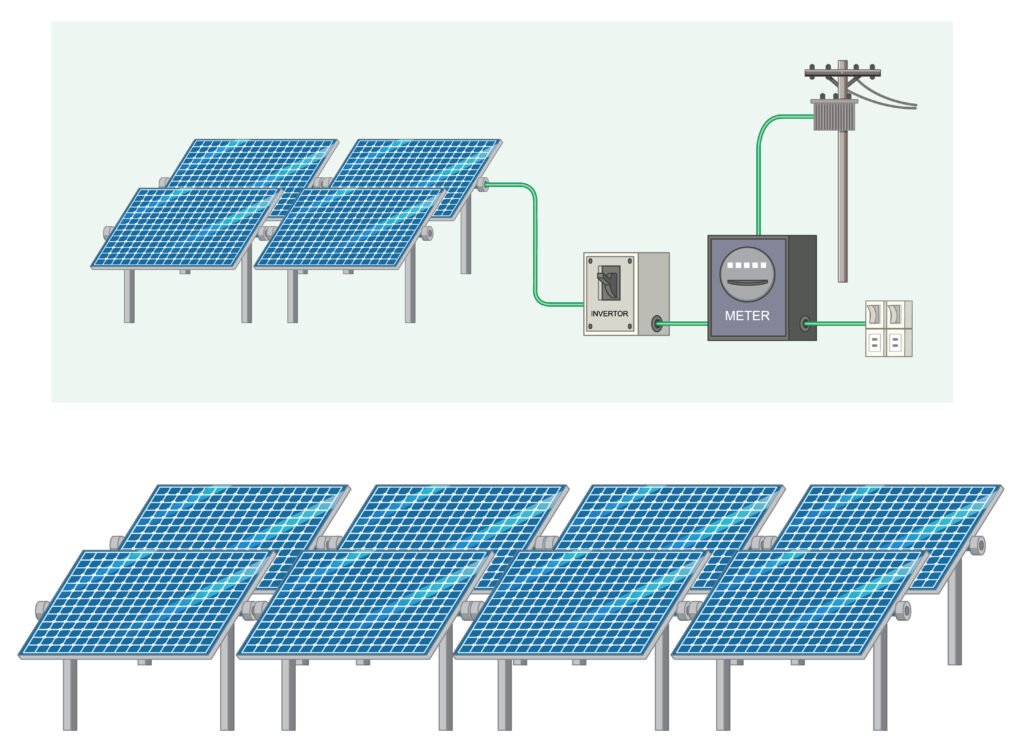
- Working Process of
Hybrid Solar System
- Advantages of
Hybrid Solar System
Energy Independence
The integration of energy storage allows you to use solar power even during grid outages, providing continuous energy supply.
Cost Savings
By utilizing stored solar energy during peak demand or at night, you can reduce reliance on grid electricity and lower your energy bills.
Increased Increased
Hybrid systems enable you to consume more of the solar energy you generate, maximizing the return on your investment.
Backup Power
During power outages, the energy storage component of a hybrid system can provide backup power to essential loads, ensuring uninterrupted operation.
Demand Management
Hybrid systems can be programmed to automatically prioritize the use of stored solar energy during high-demand periods, reducing peak load and potentially lowering electricity costs.
Environmental Impact
By reducing reliance on grid power and utilizing clean solar energy, hybrid systems help reduce carbon emissions and contribute to a greener environment.
Flexibility
Hybrid systems offer the flexibility to switch between grid-connected and off-grid modes, providing adaptability to changing energy needs and grid conditions.
Scalability
Hybrid systems can be easily expanded by adding more solar panels or increasing battery capacity, allowing you to meet growing energy demands.
Long-Term Savings
Over time, a hybrid solar system can provide significant savings on energy bills, making it a cost-effective and financially rewarding investment.
Energy Management
Hybrid systems often include advanced energy management systems that monitor energy usage and optimize the performance of the system for increased efficiency.
Product Features
- Efficiency up to 20%
- High Remuneration
- Optimum Raw Material
- Negligible Power Loss
- Higher Output
Product Advantages
- High Efficiency
- Long Lifespan
- Durable and Reliable
- Lower Temperature Coefficient
- Higher Return on Investment